
Are Cross-Docking Benefits Worth the Operational Shift?

Quick Summary
Cross docking benefits distribution centers by moving inbound freight straight to outbound trucks without long-term storage. This cuts warehouse space needs, lowers handling and holding costs, and shortens product dwell time, which speeds fulfillment.
Cross docking needs far less storage, freeing floor space for sorting, staging, and dock doors.
Fewer put-away and pick transactions mean fewer touches per unit, cutting labor, equipment, and error risk.
Shorter dwell time supports faster delivery, especially for perishable, seasonal, and promotional goods.
Schedule dependency is the main risk: late inbound or outbound freight stalls staging and erodes speed gains.
Map current freight flow and measure dwell time and touches per unit before changing the operation.
Is your dock ready for cross docking?
ContinuumPMC helps distribution teams assess readiness and build workflows that hold up in daily operations.
Table of Contents
What Cross Docking Is and How It Works in a Distribution Center
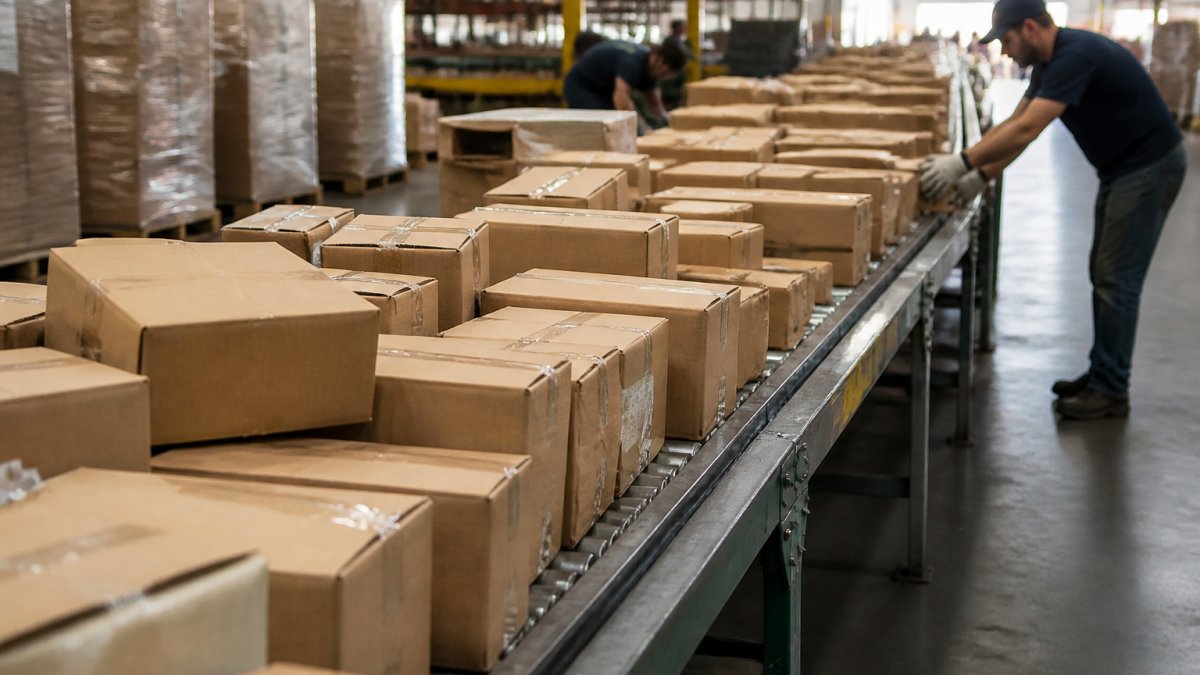
Cross docking is a logistics method where inbound freight is unloaded, sorted, and shipped out again without being put into long-term storage. Freight moves straight from a receiving dock to an outbound trailer, often within hours. The product may sit for a short staging period, but it does not go to a reserve rack.
The process has three main steps. Trucks arrive with mixed loads from several suppliers. Receiving staff break those loads down and sort each item by destination store, customer, or carrier. Then the sorted freight is consolidated onto outbound trucks at the opposite side of the building. Done well, the whole sequence depends on timing. Inbound and outbound schedules must line up, or the freight waits on the dock.
Cross docking is not the same as a warehouse with fast turnover. A conventional distribution center receives goods, puts them away, and picks them later. A cross dock skips most of that. This is why supply chain teams treat it as a flow strategy, not just a storage decision. Many retailers and logistics providers use it for fast-moving goods that already have a confirmed destination when they arrive.
Key Benefits of Cross Docking for Distribution Centers
The main case for cross docking is that it removes steps that add cost without adding value. Each benefit below ties back to that core idea.
Reduced Warehouse Space and Storage Requirements
Cross docking needs far less storage than a traditional facility. Because freight stays only briefly in the building, a dock can handle large volumes on a smaller footprint. That frees floor space for sorting, staging, and dock doors.
Less storage also means fewer forklift moves and less reach-truck traffic.
Lower Inventory Holding and Handling Costs
Inventory that never gets put away costs less to hold. Fewer put-away and pick transactions mean fewer touches per unit. Each touch carries labor, equipment, and error risk. Cutting touches therefore lowers the cost of handling every case.
Holding costs are harder to quantify, since they include capital tied up in stock, insurance, and obsolescence risk. Still, reducing the time product sits in the building lowers all of them. Many operations find that the labor savings are the easiest to show first.
Faster Order Fulfillment and Shorter Product Dwell Time
Dwell time is the number of hours or days a product spends inside the facility. Cross docking shortens it sharply. Faster dwell time supports quicker delivery to stores and customers, which matters most for perishable goods, seasonal products, and promotional items with narrow sales windows. Packing is the final stage before shipment, so practical guidance on packing stations can help shorten that last step. For broader guidance, see outsourced and hybrid fulfillment strategies for handling order volume.
Shorter dwell time also improves inventory visibility. When freight moves quickly, the system shows an accurate picture of what is on hand, which supports better coordination with suppliers and carriers.
Cross Docking Example: How a Receiving Dock Moves Freight in Hours
Consider a regional distributor that receives a full truck of mixed consumer goods from six suppliers early in the morning. Each supplier's pallets carry labels for three retail stores. Under a traditional model, the goods would go to reserve racking, then be picked later that day for each store.

Under cross docking, receiving staff scan each pallet on arrival and the warehouse management system assigns it to a store-specific outbound door. Teams looking to shorten the walk between dock doors and staging lanes can review how to reduce warehouse travel time. Workers move cases to a staging lane marked for each destination. Outbound trailers are loaded in the afternoon and leave before the end of the shift. The whole cycle can finish in a single shift when the inbound and outbound schedules are tightly coordinated.
The example shows where the process succeeds or fails. A late supplier truck or a missing outbound carrier can stall the lanes and push freight into overnight storage. Teams that plan for those gaps keep their dwell-time gains. Teams that do not often end up with a partial cross dock and a partial warehouse.
Disadvantages of Cross Docking and Failure Modes to Plan For
Cross docking carries real risks, and many guides skip them. The most common failure is schedule dependency. The model assumes that inbound and outbound freight arrive on time. When they do not, the staging area fills and the operation loses its speed advantage.
Other failure modes include:
Poor shipment data. If advance shipping notices are wrong or late, sorting errors follow.
Carrier capacity gaps. Without an outbound truck ready, freight sits on the dock.
Labor peaks. Cross docking concentrates work into short windows, which requires flexible staffing.
Limited fit for some products. Items that need inspection, kitting, or long holding periods rarely suit the model.
Higher setup demands. Dock layout, scanning, and system integration all require upfront investment.
Each of these can be planned for. Teams should set escalation rules for late trucks and define a clear fallback, such as short-term staging, when freight cannot move on schedule.
Cross Docking Advantages and Disadvantages: A Suitability Decision Framework
Whether cross docking suits a given operation depends on a few factors. Use the questions below to test fit before committing.
Question | Points toward cross docking | Points away from cross docking |
Is the destination known at receipt? | Yes, orders or store allocations are set | No, product is held until demand appears |
How fast does the product move? | Fast or time-sensitive | Slow or seasonal storage needed |
How reliable are inbound schedules? | Carriers and suppliers arrive on time | Frequent late or unpredictable arrivals |
Is there dock capacity and room for staging? | Adequate doors and floor space | Limited doors with no staging area |
Is shipment data accurate in advance? | Advance notices and labels are reliable | Data arrives late or with errors |
If most answers point toward the left column, cross docking is likely worth the shift. If they point to the right, a hybrid model or a conventional approach may fit better. A tiered approach, where fast-moving goods cross dock and slow movers go to storage, is common.
Checking Your Readiness Before Moving to Cross Docking
Before changing the operation, confirm that the basics are in place. Start by mapping current freight flow and measuring present dwell time, touches per unit, and dock use. Those baselines show where cross docking would help most.
Next, check your data and systems. Advance shipping notices, accurate labels, and a warehouse management system that can direct freight in real time are prerequisites. Then review carrier and supplier schedules to see how reliable inbound and outbound timing is.
Finally, plan for the people side. Staff need training on sorting, staging, and exception handling. Supervisors need clear escalation paths for late trucks. Pilot the process on one product line or one set of doors before scaling. A pilot shows real results and surfaces failure points while they are still cheap to fix.
If you want an outside view of your readiness, talk to an expert at ContinuumPMC about where your operation stands before you change how freight moves.
Frequently Asked Questions
What are the advantages of cross-docking?
Cross-docking moves inbound freight directly to outbound trailers with little or no storage in between. The main advantages are less warehouse space needed, lower inventory holding and handling costs, fewer product touches and less labor, and faster order fulfillment because goods spend less time in the building. Results depend on how well inbound and outbound schedules are synchronized. Pricing for any consulting support depends on scope, facility size and timeline, so contact ContinuumPMC directly for a quote.
What are the disadvantages of cross-docking?
Cross-docking depends on tight timing. If inbound trucks arrive late or outbound carriers miss their windows, product can pile up on the dock and the process breaks down. It also requires good data, warehouse management system visibility, and supplier and carrier coordination. Operations with irregular volumes, unreliable suppliers or limited dock doors may find it harder to sustain. Planning for these failure modes before implementation reduces the risk of disruption.
Can you give me an example of a cross-docking warehouse?
A regional retail distributor might receive full truckloads from several suppliers at its inbound dock. Staff sort the cases by store destination and load them directly onto outbound trailers scheduled for each store, usually within the same shift. Because the product never goes into racking, the building needs less storage space and each store receives its order faster. This pattern is common for fast-moving consumer goods with predictable demand.
How does cross-docking work in a distribution center?
Inbound freight is received, checked and sorted at the dock, then transferred directly to outbound doors for shipment to customers or stores. Storage is limited to short-term staging, typically hours rather than days. The process works best when inbound arrivals and outbound departures are scheduled together so that goods are never held longer than necessary.


Comments